Baby Bottle-Feeding for New Parents
I’m a mother of two children, and they are 22 months apart. My daughter is almost 4 years old and my son is almost 2 years old. Since my kids outgrown from baby bottles by now, I have always found it interesting how the baby bottle-feeding works. Since there are not many resources for new parents to learn bottle feeding, you may find yourself being clumsy when holding the baby, not knowing what to do when your little one spitting up, or having a panic attack when your baby crying nonstop for hours. In this post, I want to share a few tips about bottle-feeding to new parents, so your baby can drink at ease.

We all know breastfeeding is the best for newborns up to 12 months old. Breastfed babies have fewer health problems than babies who don’t breastfeed. Your breast milk changes as your baby grows so they get exactly what they need at the right time. It’s best to feed your baby only breast milk for at least 6 months. However, there are many mothers who are unable to produce enough breast milk or unable to feed breastmilk for their baby. They have to decide using bottle-feeding for their baby. Here is the following reasons:
- Mothers who cannot breastfeed due to certain medical issues, and/or produce very little milk
- Mothers who plan on going back to work and are nervous about the full-time pumping life, and not sure what to expect
- Mothers who want to give fathers a more hands-on experience with baby, and bottle feeding gives them some special one-on-one time.
- Mothers who aren’t interested in nursing, and so they need to know what to look for when it comes to frequency of feedings and keeping their baby full
- Infertile mothers who are unable to giving birth to their child (due to medical history such as hysterectomy, uterine cancer, ovarian cancer, endometriosis, or other problems related to their gynecological issues). The biological parents would make their biological baby’s embryos by IVF (in vitro fertility), and the embryo will be transferred to a surrogate’s uterus. After the surrogate becomes pregnant, she will help to carry the baby for the biological parents, and give birth to the baby 40 weeks later. In this situation, the biological mother cannot produce milk at all to her biological baby.
- Two fathers who creating a baby via IVF, given birth by a surrogate: This scenario is very special for LGBT parents, who having their biological baby with a surrogate. There is no way the baby can be breastfed by their dads. So they must use bottle feeding for their baby.
No matter where you fit, there are a few need-to-knows for all the moms and dads out there trying their best to fill up those little tummies.
1. How does a baby bottle work?
When babies feed, they suck liquid from the bottle through the nipple. As the liquid leaves the bottle, air enters in through the vent into the feed. The internal vent allows the air to enter and directs it to the area above the liquid, keeping the air and the liquid separate. Because there is no vacuum to inhibit the flow of liquid, babies can feed at their own pace.
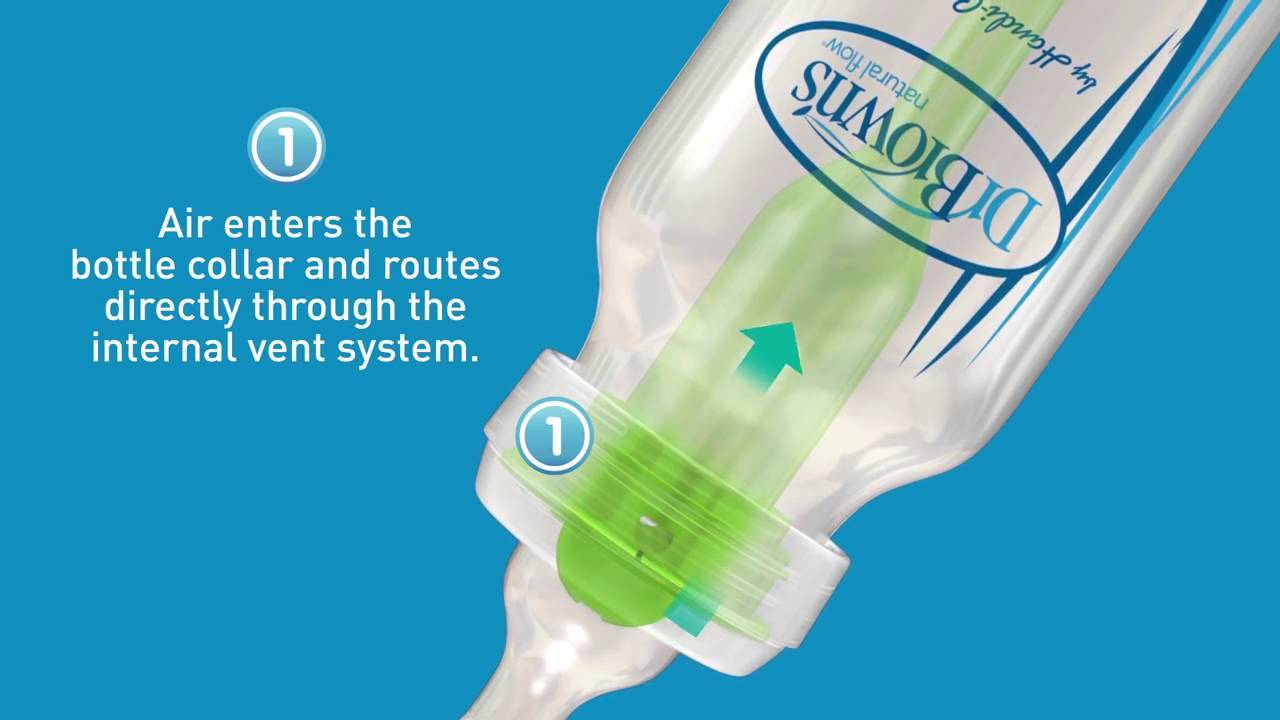
2. Why is it good to prevent a vacuum from developing in the bottle?
There are two major problems associated with most traditional baby bottles: air and vacuum.
- Air ingested by babies can cause discomfort, sleepless nights and symptoms associated with “colic”.
- A vacuum in the bottle can transfer air to a baby’s middle ear and can encourage fluid to be drawn in. Traditional and restrictively vented bottles tend to develop vacuums when babies feed from them because babies need to suck progressively harder to get any liquid from them. Babies seal their lips to the teat when they nurse, but as the vacuum increases they ingest air through a weakened teat seal. Air enters the bottle through the vent in the teat and aerates the formula; this air is ingested.
3. Baby-bottle nipples
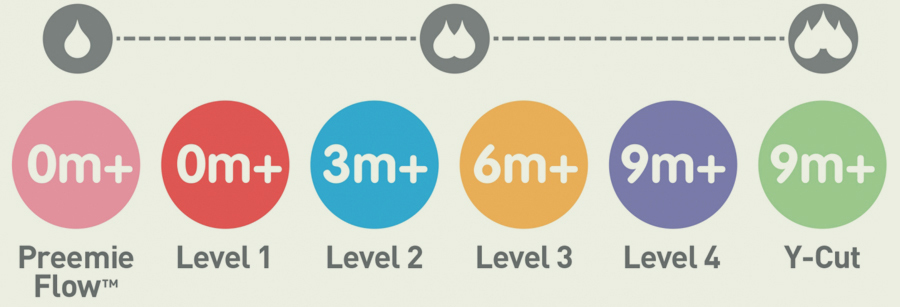
They come in many shapes and sizes. Choose nipples that match your baby’s mouth size and developmental needs. A baby’s comfort and ease of sucking are the criteria to use when choosing a nipple.
There are four basic baby-bottle nipple types: regular nipple with slow, medium or fast flow (the number and size of the holes will determine flow). When you notice any of these signs, it usually means that the baby is not getting a fast enough flow and it is time to move up a level:
-Baby is taking longer to finish eating.
-Baby becomes fussy or irritated while eating.
-Baby falls asleep during the feeding
4. Keep bottle-feeding equipment in good condition
-Discard cracked or chipped bottles that could break and spill formula onto your baby.
-Replace nipples regularly, as they can become “gummy” or cracked with age.
-Check the size of the opening on new nipples and then periodically as you use them. Formula should flow from the nipple in even drops — not a steady stream. If the milk flows too quickly, your baby could choke, so discard the nipple. If the milk flows too slowly for your baby, consider trying a nipple with more holes, designed for older babies.
5. Feed Your Baby Correctly
-Position
Hold your baby at a 45-degree angle while feeding them and burp them halfway through to minimize spitting up. Formula-fed babies tend to eat less often than breastfed babies because formula is harder to digest than breastmilk, This will help reduce the amount of air that she swallows, which should ease gas and tummy troubles.
-Burp
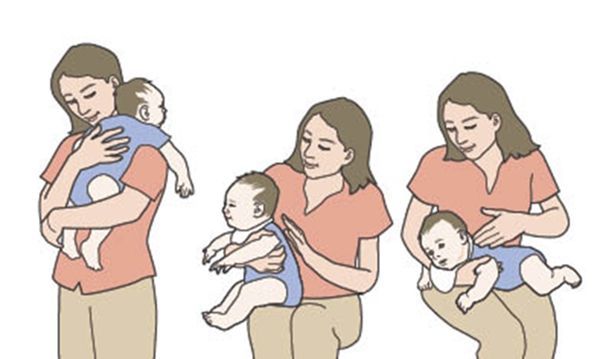
Babies get fussy and cranky when they swallow air during feedings because it makes them feel uncomfortably full. This happens more often with bottlefed infants, though breastfed infants can also swallow air. The fussing can turn into a vicious circle, causing baby to swallow even more air and become even more upset. To prevent a tummy full of air, burp your baby frequently – after every 60cc - 90cc of milk. If your baby doesn’t burp after a couple of minutes of trying, resume feeding. Here are the three best positions:
- Over the shoulder: Drape your baby over your shoulder and firmly pat or rub her back.
- On the lap: Sit your baby upright, lean her weight forward against the heel of your hand, and firmly pat or rub her back.
- Lying down: Place baby stomach-down on your lap and firmly rub or pat her back.
-Leaking
If you overheat the liquid in the bottle, the vapor will rise and condense in the vent. To prevent leaking, AVOID warming the liquid beyond body temperature. Over-tightening of the collar will also create a pressure build-up. You should twist the collar enough to close.
6. Bottle-feeding problems and solutions
Babies can sometimes have trouble feeding. Usually, the problem is temporary. The first thing to do is OBSERVE your baby. Try to get a feel for her temperament as well as her feeding and sleeping routine.
-Your baby sleeps a lot
If your baby sleeps a lot, you probably wonder whether you should wake her to feed. Knowing what’s best isn’t always easy. You can follow her routine and let her sleep if she:
-wakes up on her own to feed;
-is an active and effective feeder;
-pees at least 6 times and passes at least 3 stools a day;
-is calm and seems satisfied after feeding;
-has regained her birth weight and continues to put on weight.
In this case, there is nothing to worry about. Babies each have their own routine that develops over time.
You may need to wake your baby up to feed her if she sleeps a lot. Some babies sleep so much they may skip some feedings, especially during the first 2 to 3 weeks. This means they will have a hard time getting all the milk they need. If your baby sleeps a lot and doesn’t show the signs described above, you need to stimulate her to drink more.
What to do?
-Keep an eye out for signs that she’s sleeping lightly (she’s moving, making sucking motions, or moving her eyes beneath her eyelids) when it will be easier to wake her up.
-Stimulate her: talk to her, massage her back, legs, arms, etc.
-Leave her in an undershirt or diaper: babies drink less when they are warm.
-See a professional if you’re worried or see no improvement after a few days
-Your baby drinks very slowly
Babies can’t always suck effectively at the start. This is more common among babies who were born a few weeks prematurely (between 35 and 37 weeks of pregnancy). Even full-term babies may need a few days or weeks to get the hang of things. This situation usually improves with time. Be patient: your baby is learning. Some babies, however, will continue to drink slowly even as they get older.
What to do?
-Change to a faster nipple.
-Stimulate your baby as she feeds by rubbing her feet and tickling her back and sides.
-Run your finger under her chin and across her cheeks to stimulate her.
-Change her diaper or change her position for a few minutes.
-Your baby often chokes while drinking
If the nipple you are using flows too quickly and your baby has too much milk in her mouth, she may choke (i.e., she swallows noisily, coughs and spits up a little milk).
What to do?
-Change to a slower nipple.
-Take short feeding breaks.
-Avoid laying your baby on her back during feeding since milk will flow into her mouth even when she’s not sucking. Try to feed her in a near-sitting position so that the bottle is tilted only slightly downward (just enough for the nipple to fill with milk and not air). Your baby will then be able to drink at her own pace.
-Your baby pukes a lot
As long as your baby is happy and putting on weight, spitting up is generally nothing to worry about. Some babies drink very fast, and their stomachs expand too quickly. This makes it easier for them to regurgitate, especially if they are very active and start moving around right after feeding. If milk is coming out of the bottle too quickly, your baby will drink too much just to satisfy her need to suck. If she regurgitates a lot, the nipple on the bottle may be too fast.
What to do?
If your baby is in good spirits and gaining weight, there’s nothing to worry about. You don’t need to do anything.
If vomiting seems to be bothering her, watch her drink. If necessary, try these strategies:
- Change to a slower nipple.
- Take short feeding breaks.
- Try to burp her more.
- Avoid laying your baby on her back during feeding. Try to feed her in a near–sitting position so that milk will flow into her mouth more slowly.
- Try to keep activity to a minimum right after feeding.
It’s best to see a doctor if your baby
- seems to be in pain;
- projectile vomits several times a day;
- wets fewer diapers;
- isn’t putting on enough weight.
Thanks for reading and good luck!